A hanok is worth one night in Seoul if you want a traditional courtyard house and can sleep on a floor mattress; a hotel is the better base for the rest of the trip. The two are not equal substitutes, because they trade comfort and convenience against atmosphere.
This guide compares the two on the points that decide whether you will be happy: bedding, bathroom, noise, heating, arriving with luggage, and house rules. For the wider question of neighborhoods, see where to stay in Seoul as a first-timer.
Hanok vs hotel at a glance
Use this table as a checklist. It describes typical differences, not any single property, so confirm each item on the listing page before you book.
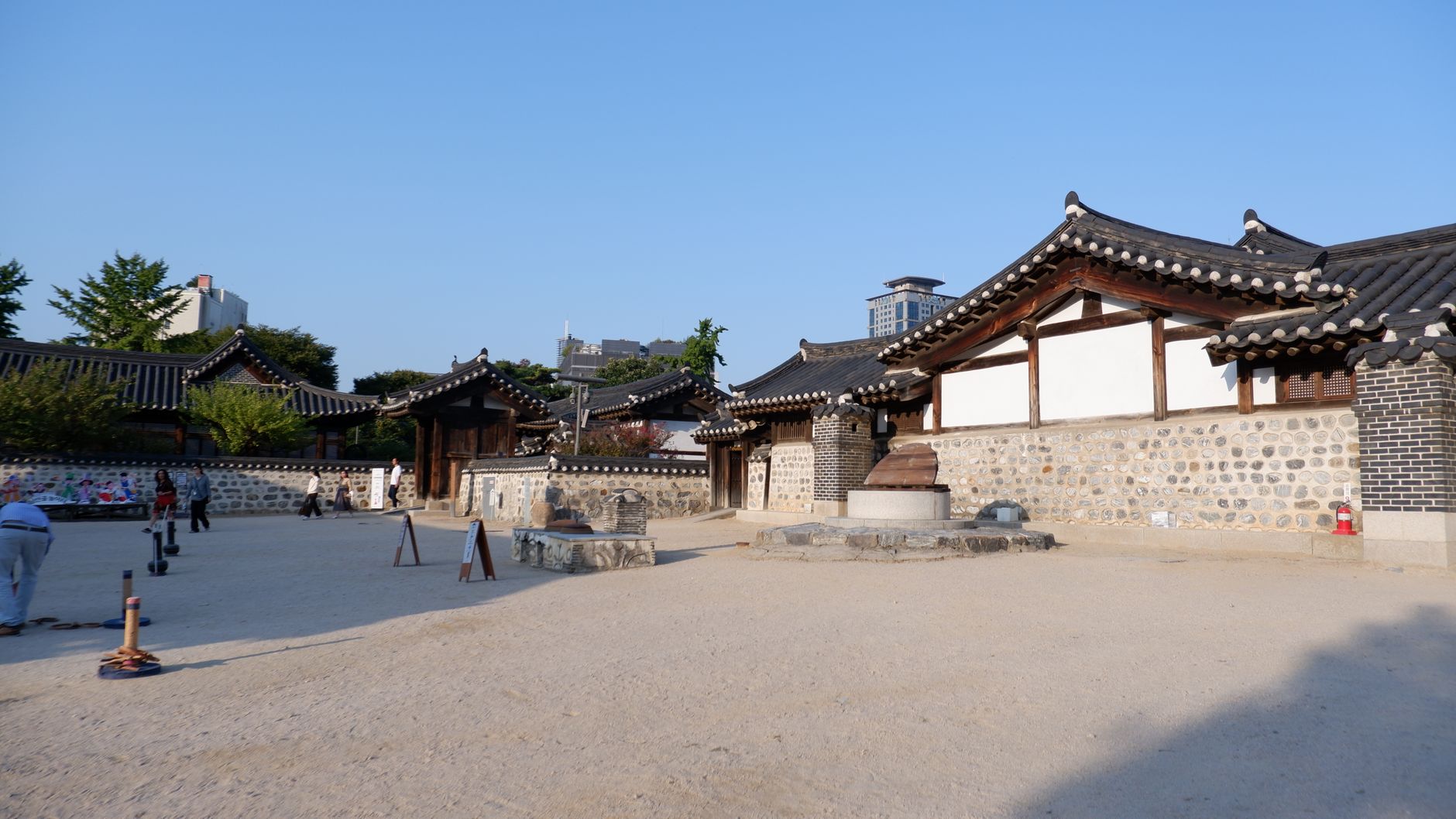
Explore traditional Hanok village architecture under a bright blue sky in Seoul, South Korea.
| Point | Typical hanok | Typical hotel |
|---|---|---|
| Bed | Floor mattress and quilt on a heated floor | Raised bed with a standard mattress |
| Bathroom | May be private, shared, or in a separate building | Private en-suite |
| Noise | Light walls and doors can carry sound | Better insulation, but depends on the building |
| Heating and cooling | Ondol floor heating; cooling varies by room | Central heating and air conditioning |
| Arrival | Narrow alleys, slopes, steps, no elevator | Lobby, elevator, front desk |
| Atmosphere | Courtyard, wooden beams, tea-house feel | Modern and predictable |
| Rules | Shoes off, quiet hours, often a curfew-style house rule | Usually few |
For current rates, check the official price page of the property or the booking page you use. Prices change by season and date, so no figure is quoted here. Rates can also be placed against your overall budget using the daily budget for independent travel in Korea.
Bedding: floor mattress versus a bed
A hanok room is built around the floor. Bedding is usually a thin mattress and quilt laid on the ondol floor, then put away in the morning. If you have back, hip, or knee problems, getting down to and up from the floor matters more than the decor. Ask whether extra padding is available and whether it carries a fee. Some hosts include it, others charge, and the listing should say which.
A hotel bed has no such question. If you know you sleep badly on firm surfaces, choose the hotel.
Bathroom: private or shared
Bathroom setup is the single biggest surprise in a hanok. Some rooms have a private bathroom inside, some have one attached outside the room, and some guesthouses share. Before booking, look for the words private bathroom in the room description and check photos. If it is unclear, message the host and ask where the toilet and shower are and how many rooms share them. A hotel almost always avoids this question.
Noise and sound insulation
Traditional construction uses wood, paper-style doors, and shared courtyards. That gives a lovely setting but weaker insulation than a modern hotel. Voices in the courtyard, someone opening a door at night, or neighbors in the next room can be audible. Light sleepers should ask which room is farthest from the courtyard and the street, and should bring earplugs. Hanok neighborhoods are also residential, so quiet hours apply in the evening.
Heating and cooling
Ondol is underfloor heating. In winter it is the best part of a hanok: the floor is warm and the room feels cozy. Check the controls on arrival so the floor does not get too hot overnight. In summer, ask whether the room has air conditioning and whether a fan or windows are the only cooling. A hotel’s central system is more predictable in both seasons.
Location and arriving with luggage
Hanok stays cluster around areas such as Bukchon, Seochon, and Anguk. Those streets are often narrow, sloped, and cobbled, and a taxi or bus may drop you at the end of an alley rather than at the door. Stairs, a raised threshold, and a courtyard step are common, and there is rarely an elevator. A rolling suitcase can be hard work on slopes, so pack light and consider a small bag for the hanok night.
The airport leg is easier than the last few hundred meters. See getting from Incheon Airport to Seoul, and use booking a taxi with Kakao T to enter the exact address for the drop-off. Ask the host for a pin and for the nearest street a car can reach.
Bukchon visiting hours: checked 2026-11-14
Bukchon introduced tourist visiting-hour limits for its most residential stretch. As reported by The Korea Times and based on Jongno District Office measures, the Red Zone is open to tourists between 10:00 and 17:00, and tourist entry from 17:00 to 10:00 is restricted to protect residents’ privacy. A separate bus restriction also applies in the area.
What this means for a staying guest: Asiae, reporting on Jongno District measures (published 2025-02-28), lists guests staying overnight among those exempt from the fines, together with registered residents and their families and acquaintances. The same report says exempt people can still be fined if they take part in tourism activities, so use the Red Zone to reach your lodging and save sightseeing for the open hours. Before booking a Bukchon-area hanok, ask the host in writing how check-in works after 17:00, which street to use, and whether you should carry your booking confirmation. If the answer is vague, pick a hanok in Seochon or Anguk, where the same question is less pressing, or arrive earlier in the afternoon. For general visiting information see the Bukchon Hanok Village visiting guide. Rules can change, so confirm with the Jongno District Office or the official Seoul tourism site before you go.
House rules
Expect to remove your shoes at the entrance, keep voices low after the evening quiet hour, and avoid wandering into private areas. Some places set a check-in window and ask for a late-arrival notice. Read the rules on the listing before you book.
Who should choose a hanok and who should skip
Choose a hanok if you want atmosphere, are comfortable on the floor, travel light, and are happy to give up some convenience. Couples and solo travelers on a short culture-focused trip suit it best.
Choose a hotel if you have mobility limits, a heavy suitcase, a family with young children who need a bed, a light sleep, or you arrive late at night. Business travelers and anyone on a tight schedule should also lean toward a hotel.
A one-night hanok plus hotel plan
The easiest compromise is to split the stay. Spend your first or second night in a hanok, ideally when you have a morning free and little luggage, then move to a hotel near a subway line for the rest of the trip. Leave heavy bags at the hotel if it offers storage, and take only an overnight bag to the hanok. One night is enough to judge whether floor sleeping, shared walls, and the neighborhood suit you, and two nights is a sensible maximum for a first try.
Booking lead time and cancellation
Hanok rooms are few, so popular ones fill earlier than hotel rooms, especially in spring and autumn. Check the cancellation terms on the listing and screenshot them. Because the rules differ for each property, rely on the host’s policy and not on assumptions. Before paying, confirm the room type, bathroom, bedding, and arrival instructions in writing.
Bottom line
A hotel is the safer base. A hanok is the memorable add-on. Book the hanok for one night, confirm the bathroom, bedding, arrival route, and Bukchon hours in writing, and keep a hotel booked for the rest of your stay.
Last verified 2026-11-14. Prices, times and rules may change, so check the official sources before you travel.