If you’re flying internationally to Korea for cherry blossom season or fall foliage, book your flight about 4 to 6 months before departure and your hotel for the exact peak week about 2 to 3 months ahead — and lean toward the earlier end of both ranges for cherry blossom week, since its bloom window is much shorter than the foliage season.
That single rule hides a real difference between the two seasons, and getting the timing wrong means either paying a lot more or finding your preferred area sold out. Here’s the reasoning, with numbers, so you can plan against it instead of guessing.
Why Cherry Blossom Week and Fall Foliage Need Different Booking Timelines
The core difference between the two seasons isn’t how popular they are — it’s how long the “peak” actually lasts. According to the Korea Tourism Organization’s 2026 forecast, Jeju’s cherry blossoms are expected to reach first bloom around March 25 and peak around April 1, while Seoul follows with first bloom around April 3 and peak around April 10. In both cities, full peak bloom only lasts about 7 to 10 days before petals start falling, and the whole blossom season moving from Jeju up to Seoul spans roughly three to four weeks.
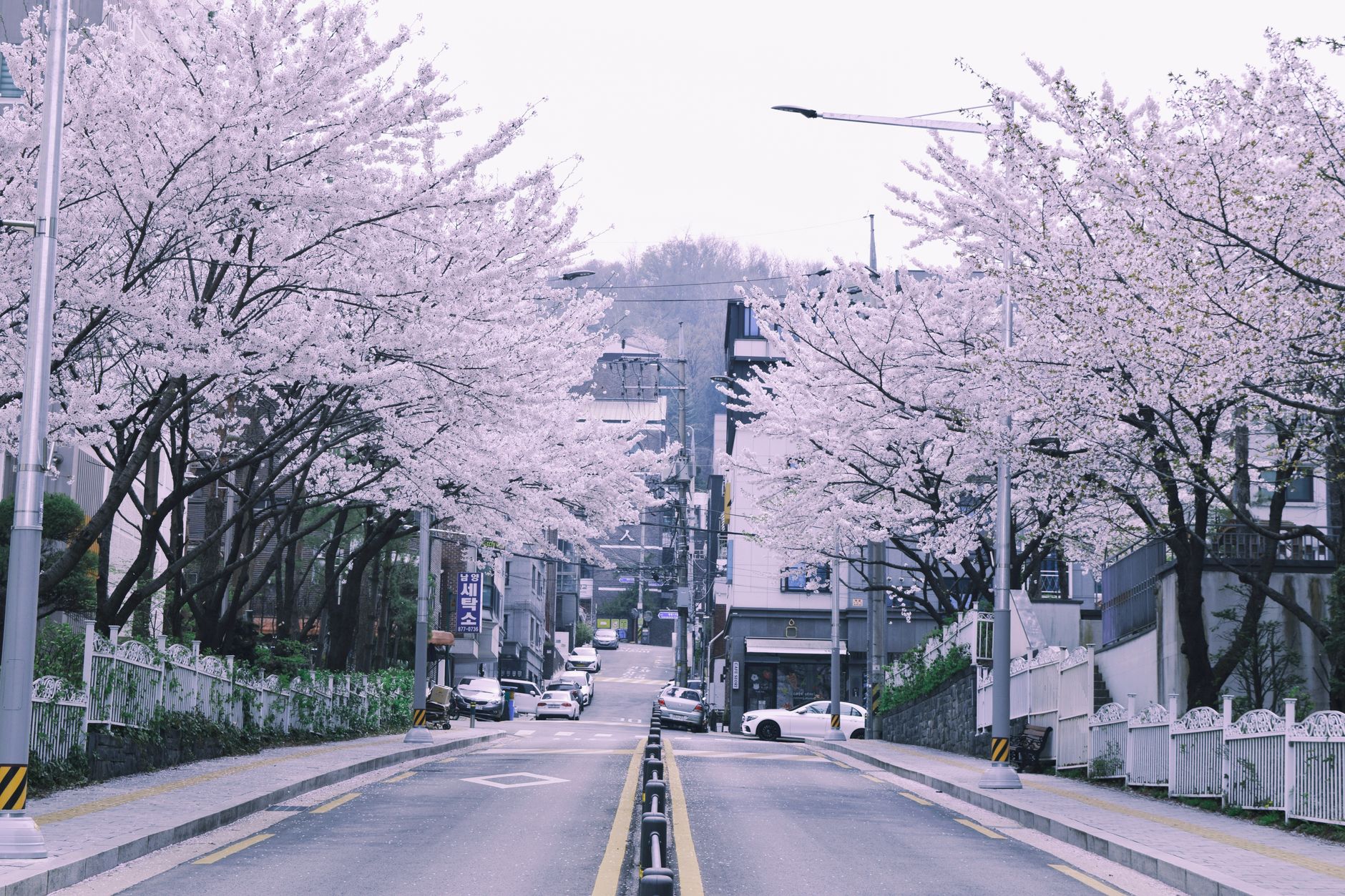
Cherry blossom trees framing a quiet street in Seoul, South Korea during springtime.
Fall foliage behaves differently. The color front starts at Seoraksan on Korea’s northeast coast (forecast peak around October 20-25, 2026) and moves south and into cities over several weeks, with Seoul’s peak landing later, around November 5-15. Because the color moves slowly and stays near-peak in some region of the country for weeks at a time, you have more flexibility to shift your exact travel dates by a few days without missing the season entirely. A cherry blossom trip doesn’t have that cushion — miss the 7-10 day peak in your chosen city and you’re looking at bare branches, not a shorter version of the same view.
That’s why cherry blossom travelers should book earlier and more rigidly around the forecast peak date, while fall foliage travelers can book slightly later and build in a few flexible days.
How Far Ahead to Book International Flights to Korea
Neither Korean nor international airlines publish a Korea-specific booking calendar, but general international airfare research gives a reliable range to apply here. Going.com’s 2026 flight-pricing data finds that international fares are typically cheapest 3 to 5 months before departure, with competitive pricing generally available in a 50-to-179-day window before the flight, and peak-season routes (which both Korean cherry blossom and foliage weeks qualify as) rewarding booking even earlier, in the 4-to-10-month range. NerdWallet’s analysis adds that so-called last-minute deals are mostly a myth: fares typically rise, not fall, in the final three weeks before departure, across markets.
Applied to a Korea peak-season trip, that means: book your flight 4 to 6 months out for the best balance of price and seat availability. If you’re targeting the narrow cherry blossom peak specifically (rather than just “spring in Korea”), book toward the 5-to-6-month end, since you can’t shift your dates much once you’ve picked a city and a forecast peak week. If you’re targeting fall foliage, a 4-to-5-month lead time is usually enough, since you can still adjust your dates by up to a week if the color front runs early or late.
How Far Ahead to Book Hotels for Peak Season
Hotel inventory in Korea doesn’t disappear as early as flight seat classes do, but it does tighten noticeably in two situations: cherry-blossom-view rooms near specific parks or rivers (like areas close to the Han River or Yeouido’s blossom-lined roads), and any accommodation during Chuseok or national holiday overlaps with foliage season. For a standard room without a specific view requirement, booking 2 to 3 months ahead is enough to get a reasonable rate and location in both seasons. If you specifically want a room with a cherry blossom view, or you’re traveling during a Korean public holiday that overlaps with foliage season, move that up to 3 to 4 months to avoid being pushed into a different neighborhood.
Flight and Hotel Price Progression as Your Trip Date Approaches
Korea-specific day-by-day pricing data isn’t publicly released by individual airlines or hotel chains, but the general shape of the price curve from Going.com and NerdWallet’s research is consistent enough to plan around:
| Time before departure | Typical flight price trend | Typical hotel price trend |
|---|---|---|
| 6+ months out | Fares available but not yet at their lowest; most seat classes open | Full room inventory, standard rates |
| 4-6 months out | Fares usually at or near their lowest point for peak season routes | Rates still stable; good selection of room types |
| 2-3 months out | Fares begin climbing as lower fare classes sell out | Peak-week rooms near parks/rivers start closing out; rates rise |
| 3-6 weeks out | Fares continue rising; fewer seats left in any price tier | Remaining rooms are pricier or further from the action |
| Inside 3 weeks | Fares typically at their highest; “last-minute deals” are rare | Only higher-priced or less convenient rooms likely remain |
The practical read: for peak season in Korea, the 4-to-6-month mark is where flight and hotel availability still overlap with reasonable pricing. Waiting past the 2-month mark means competing for whatever is left rather than choosing from the full range.
2026 Peak Bloom and Foliage Dates by Region
| Region | Season | Expected peak (2026) |
|---|---|---|
| Jeju Island | Cherry blossom | Around April 1 |
| Seoul | Cherry blossom | Around April 10 |
| Seoraksan | Fall foliage | Around October 20-25 |
| Seoul | Fall foliage | November 5-15 |
These are forecast dates, not guarantees — the Korea Tourism Organization notes 2026 blossoms are trending 2 to 7 days earlier than average due to a warmer-than-usual late winter, and foliage timing shifts with autumn temperatures too. Build a few flexible days around the forecast peak rather than booking a single fixed date down to the day.
What Happens If You Book Late
If you’re inside the 4-to-6-week window and haven’t booked flights yet, expect to pay noticeably more than someone who booked 4-6 months out, and expect fewer direct-flight or convenient-schedule options. For hotels, late booking during cherry blossom week usually means losing access to rooms with a direct view or walking distance to the most photographed spots (not losing access to Seoul altogether) — budget on paying more for a comparable room, or staying in a neighborhood a short subway ride from the main viewing areas. If you can’t move earlier, consider shifting your trip by 3-5 days off the forecast peak; both seasons still look good just before or after the single peak date, and pricing on those shoulder days tends to be less competitive.
For the logistics once you land — getting from Incheon Airport into the city, or deciding where to stay in Seoul — see our dedicated guides on getting from Incheon Airport into Seoul and daily budgeting for independent travel in Korea. If you haven’t confirmed entry requirements yet, check the K-ETA entry requirements guide before you finalize flight dates, since approval timelines can affect how firm your travel window needs to be.
Last verified 2026-10-14. Prices, times and rules may change, so check the official sources before you travel.